
Searching Kingman County Civil Dockets
Begin at Kansas Case Search and pick the District option. Set the county filter to Kingman County, then add Civil as the case type. The form offers several search types: Case Number, Party Name, Business Name, Party As Business Name, and Citation Number. A case number you already know cuts through ambiguity fast. Searching a company? Use the business fields the portal provides instead of stuffing a trade name into a personal-party box.
Expect a human verification check before results load. Guest access reaches basic case details. The portal itself warns that web information is not an official court record. When a public Kingman County civil docket item or document fails to appear, try other routes. Use the courthouse terminal on the third floor, call or fax the District Court clerk, stop at the counter, or send a tight written request. Portal, terminal, and clerk form one access chain.
- Select District, Kingman County, and Civil.
- Use the full case number, or choose the correct party or business search type.
- Add a filing-date range when a common name produces too many results.
- Match the county, civil subtype, case number, roles, file date, and status.
- Read the events index, then ask the clerk for a missing public pleading, order, judgment, or certified copy.
The separate Kingman County case lookup explains the live search fields in more depth.
Kingman Civil Docket Business Searches
An organization can show up in a Kingman County civil docket as plaintiff, defendant, petitioner, or respondent. The portal draws a real line between Party Name, Business Name, and Party As Business Name. Pick whichever field matches how the party is indexed. A trade name and a legal entity name will not always return the same hits.
When a candidate case appears, confirm the match. Compare the Kingman County label, case number, civil type, filing date, and party role before trusting it. A shared name proves neither identity nor liability. If results drift into other counties, go back to the District form and reset the Kingman County filter. Should the live form differ from the official Smart Search guide? The form in front of you controls.
Note: Rule 22 grants case-by-case access. Search for a specific public case or record rather than a compiled name list.
Inside a Kingman Civil Docket
Open a Kingman County civil docket and the header tells you the court, county, case number, civil subtype, file date, status, assigned judge, and the generic roles of parties and attorneys. Below it sits the events index, sometimes called the register of actions, which lists case activity in date order. Kansas rules call it an index. It is not every filed page. It is not proof that any allegation holds true.
| Case number | A court identifier; post-2022 Kingman numbers use the KM county code, year, type, and sequence format. |
|---|---|
| Case type | Regular, limited, domestic relations, or another civil system category. |
| Parties | Plaintiff and defendant, petitioner and respondent, or other role labels. |
| Events | Filing, service, answer, motion, conference, hearing, order, judgment, appeal, satisfaction, and closure entries. |
| Settings | Date, time, location, and procedural setting label when public. |
| Documents | Pleadings, motions, orders, judgments, releases, and attachments when public and available. |
| Costs | Assessments, payments, or balance headings only when the official record supplies them. |
Here is a safe format example: KM-2022-CV-000001. It shows the county-code pattern only. The case is not real. Remember that a full case file can hold material the public docket never displays remotely.
Kingman Civil Docket Filing Mix
The official Civil Filings 2024 table lists 345 civil and domestic filings displayed for Kingman. That total splits into 24 regular actions, 236 limited actions, and 85 domestic-relations entries. Regular actions break down further. The breakdown runs three contract, ten other, eight real-property, and three tort filings. Limited actions include 233 contract filings and three other.
| Statistical group | Kingman count | Reported detail |
|---|---|---|
| Regular actions | 24 | Contract 3; other 10; real property 8; tort 3 |
| Limited actions | 236 | Contract 233; other 3; real property 0 |
| Domestic relations | 85 | Marital status 27; PFA 8; PFS 24; Parentage Act 20 |
| Displayed total | 345 | Official report total |
These are filing counts only. They are not judgments, pending inventory, a count of unique parties, or a rate of any kind. The domestic numbers reflect workload, not a family-record index, so check any specific Kingman County civil docket under the current access rules.
Civil Case Types on the Docket
Category labels on a Kingman County civil docket help narrow a search, but they never substitute for the pleadings or the final order. A regular action might involve a contract, a tort, real property, or another claim entirely. A limited action can still carry service events, motions, judgment, payments, satisfaction, or an appeal. Handle domestic-relations categories with extra care. Public access to those cases or documents may be restricted.
- Regular actions, including contract, tort, real-property, and other report categories.
- Limited actions, with contract filings forming most of Kingman's 2024 limited count.
- Domestic-relations matters, subject to Rule 22 limits on sensitive cases and documents.
- Small-claims and other civil matters assigned within Kansas District Court jurisdiction.
- Appeal events when a civil judgment proceeds through an authorized review route.
When the pleading or the judgment is what you actually need, search by the exact case number and record type. A statistical label is far too broad. It cannot show the claims, defenses, ruling, or current balance inside one Kingman County civil docket.
Kingman Civil Filing Versus Judgment
A filing simply puts a paper or case event onto the Kingman County civil docket. It proves nothing about the statement inside that paper. It settles no dispute and shows no winner. Service may come next. Then an answer, a motion, a conference, a hearing, an order, or a judgment. Later, a satisfaction or release can change what an earlier judgment means in practice.
So read the chronology with care. Look for an answer, dismissal, default-related event, trial, final judgment, appeal, amended order, or satisfaction after the first filing. A line's label can confuse you. Ask the clerk for the public order behind that entry. The events index gives you sequence; the governing document gives the court's actual direction.
Civil Docket Settings and Hearings
A setting on a Kingman County civil docket is a date on the calendar. It is not a result. The entry might be a conference. It might be a motion hearing, a trial, or another procedural step. When the entry is public, write down the date, the time, the courtroom or location, the judge, and what kind of setting it is. Then check later entries for a continuance, reset, cancellation, or an order that replaces it. A scheduling order can control several deadlines that follow. Ask for that order when the docket text leaves the setting unclear.
The Kingman District Court page posts local rules and motion-day material for the 30th Judicial District. The county hosts no daily public calendar. The portal and the clerk remain the reliable ways to confirm any Kingman setting. The Kingman County court dates resource walks through that confirmation step by step. Use it before relying on any single docket line.
Missing Kingman Civil Docket Documents
A Kingman County civil docket can show up online. One of its pleadings or orders may not. That is common and rarely means the document is sealed forever. It may simply predate conversion. It may sit only on the courthouse terminal, contain protected material, or fall within a Rule 22 limit. A public case header never promises remote access to each exhibit or attachment.
Call the Kingman County District Court at 620-532-5151. The office sits at 130 N. Spruce Street, third floor, Kingman, Kansas 67068. Hours are Monday through Friday, 8 a.m. to noon and 1 to 4 p.m. The fax line is 620-532-2952. Ask for a specific public pleading, order, judgment, or date range rather than a general request. A written Kansas Open Records Act request should state the format. It should say whether you want inspection or copies. It should also say whether certification is required. The form lets you choose email, mail, in-person pickup, or fax for delivery.
The county posts no separate fee schedule for ordinary or certified copies. Ask for an estimate before approving a large order. K.S.A. 45-218 requires an agency response by the third business day. That rule does not promise a complex copy job will be finished inside three days.
Civil Docket Access Rules
Public access to a Kingman County civil docket operates inside limits set by Kansas law, court rules, and court orders. Rule 22 draws a line between remote portal access and courthouse-terminal access, and it lists certain cases and documents that are excluded either way. K.S.A. 45-218 governs how a request is made. K.S.A. 45-221 sets out the exemptions and allows public material to be separated from protected parts when that separation can lawfully be done.
Key rules:
Kansas Supreme Court Rule 22 controls electronic public access and courthouse-terminal boundaries.
K.S.A. 45-218 covers inspection, custodian response, and reasonable request fees.
K.S.A. 45-221 identifies exemptions and protected information under the Kansas Open Records Act.
Family and protection-related categories call for extra care. An empty search is not proof that a matter never existed. The miss may stem from a wrong field, another county, conversion limits, a system failure, or a restricted category, so ask the clerk which lawful channel applies.
Kingman Civil Docket Legal Routes
A civil docket entry can point toward a later legal option without standing in for the case record itself. That is the lesson of the official statute pages tied to this Kingman County material. One is the Kansas expungement statute source. The statute page spells out the expungement process the legislature has enacted.
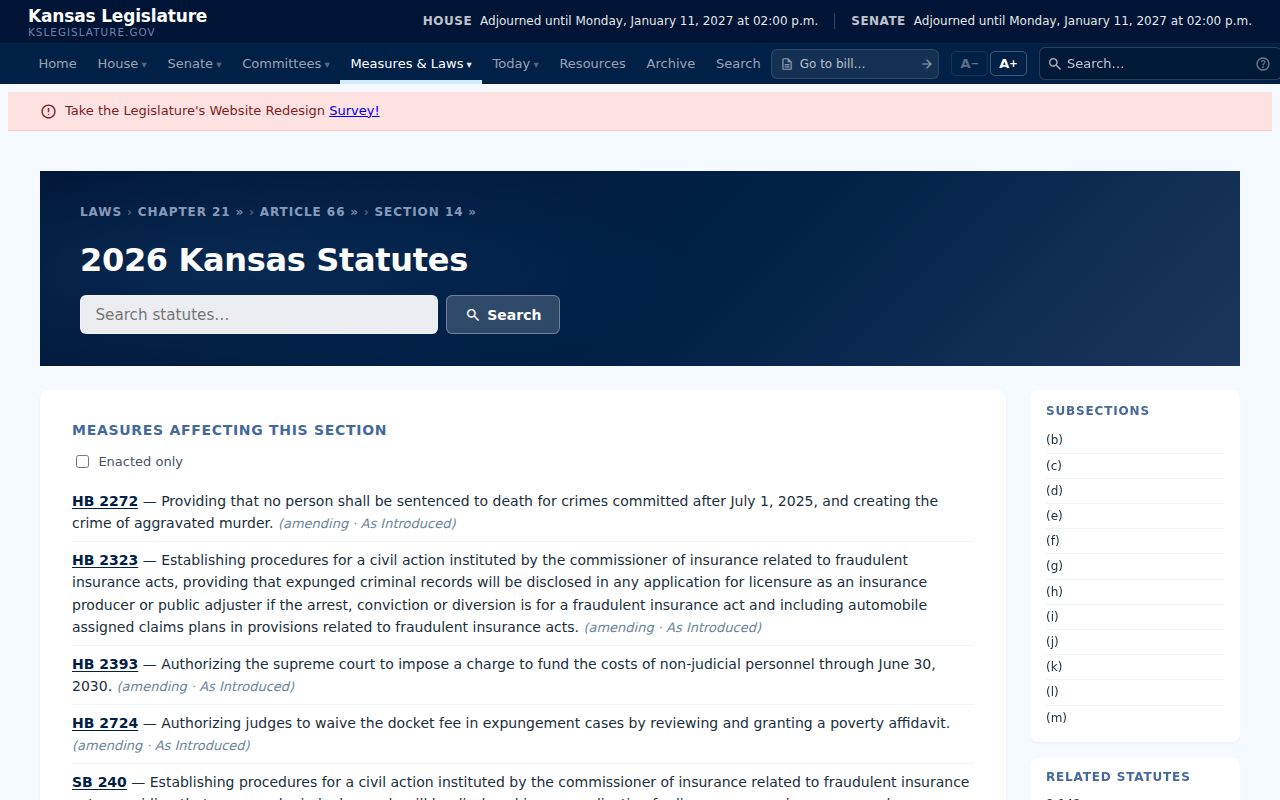
The statute text alone proves nothing about any particular civil record. Whether expungement applies depends on current law. It also depends on the record at issue. The same source set carries a second reference point, the Kansas appellate-jurisdiction statute. That page sets out which court hears an appeal. It is a question that can follow a Kingman County civil judgment.
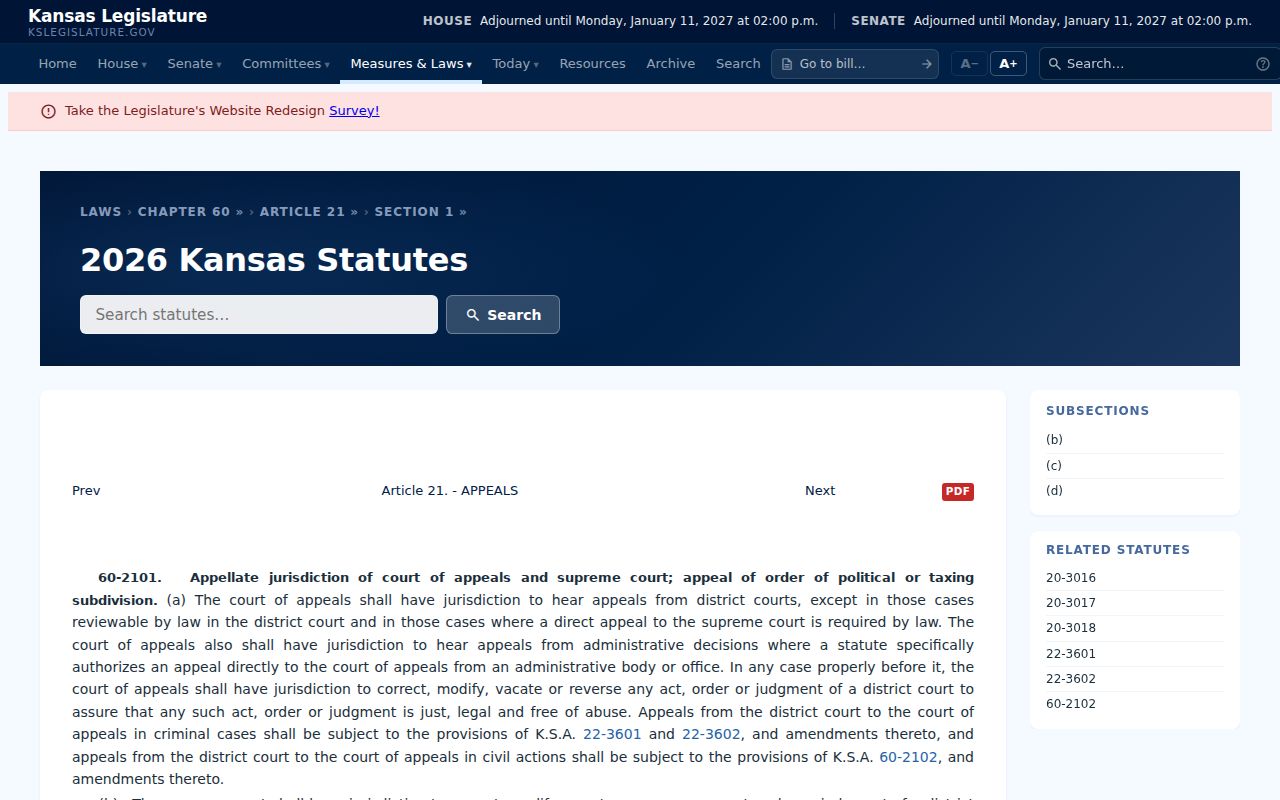
One more route deserves a word. Appeals. An appeal entry on the Kingman County civil docket opens a new procedural stage. It does not resolve the case below.
The docket and the filed notice or order still control the facts. Read them together and the appeal's true status stays clear.